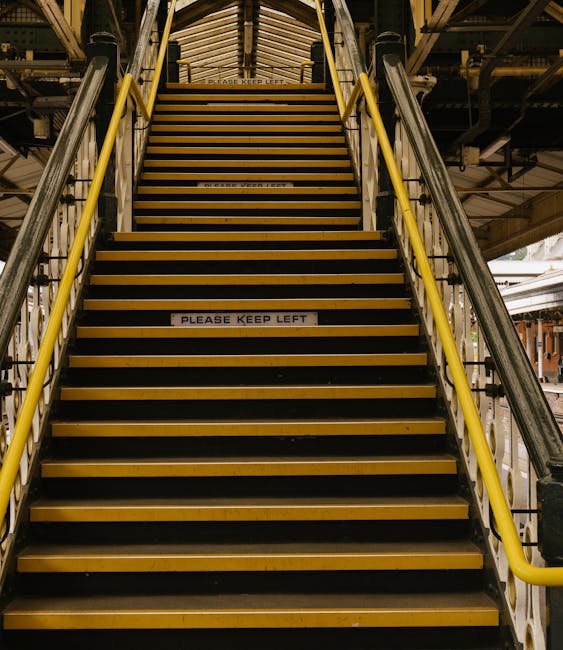
Staircase and narrow-access moves solved in Redbridge

If you have ever stared at a sofa wedged halfway through a hallway and thought, "Well, that's not going anywhere," you already understand the problem. Staircase and narrow-access moves solved in Redbridge is not just a catchy phrase; it describes the kind of careful, measured moving work that turns awkward properties, tight stairwells, and tricky access routes into manageable jobs. In flats above shops, converted houses, maisonettes, and older Redbridge properties, access can be the real challenge - not the lifting itself.
This guide explains how those moves are planned, what makes them succeed, and how to avoid the mistakes that cause damage, delays, or a bit of that awful sinking feeling when a cherished item will not turn the corner. You will also find practical checklists, real-world examples, and a few local insights that make the whole process feel less like a puzzle and more like a plan.
Why Staircase and narrow-access moves solved in Redbridge Matters
Not every move starts with a wide driveway and a straight shot to the front door. In Redbridge, many homes sit on busy streets, in terraced rows, or in buildings where the staircase is steep, the landing is tight, and the door frames seem to have their own opinions. That is where narrow-access planning earns its keep.
When a move is handled badly, the problems show up fast: scuffed walls, strained backs, broken handles, scratched bannisters, and items that need to be dismantled at the last minute. Nobody wants that. The point of good access planning is simple - make the move safer, faster, and cleaner for both the property and the people doing the lifting.
There is also a practical money angle. A move that runs smoothly tends to take less time, which can reduce labour costs and lower the chance of emergency fixes or replacement parts. Truth be told, a few extra minutes spent measuring a stair bend can save a painful afternoon later.
It matters especially in homes where furniture is bulky and life has not been kind to the layout. A king-size bed frame, wardrobe, or corner sofa may fit the room beautifully once inside, but getting it up a narrow staircase can be another matter entirely. If you have ever tried rotating a mattress in a tight hallway while someone quietly says, "bit more to the left," you know the feeling.
How Staircase and narrow-access moves solved in Redbridge Works
The process is part measurement, part problem-solving, and part calm under pressure. In a good narrow-access move, the team does not simply arrive and hope for the best. They assess the route, identify pinch points, and work out how each item will travel from room to van without forcing anything.
That usually starts with a proper access review. The stair width, ceiling height, landing shape, corner turns, front-door clearance, and parking position all matter. If the item is especially large, the team may also consider whether it should be dismantled, protected with covers, or moved on its side in a controlled way.
A careful mover will often think in sequences: remove obstacles, protect surfaces, take measurements, decide the carry angle, then move one item at a time. It sounds obvious, but it is exactly where many DIY attempts fall apart. The job is not only to move the object; it is to move it without turning the whole staircase into a damage report.
For complex loads, planning usually includes communication too. Someone is guiding at the top, someone at the base, and the person carrying needs clear, short instructions. No shouting, no guesswork, no half-remembered directions. A simple "pause," "tilt," or "steady" can make a huge difference.
If the move includes heavy, awkward, or valuable items, it is worth reading more about how to approach heavy lifts safely and sensibly and the value of controlled lifting and movement. Those principles are especially useful when stairs are involved, because momentum is the thing that gets people into trouble.
Key Benefits and Practical Advantages
The obvious benefit is that the move gets done. But there is a bit more to it than that.
- Less risk of damage: careful route planning helps protect walls, bannisters, flooring, and the furniture itself.
- Safer handling: controlled movement reduces strain and reduces the chance of slips or awkward twisting.
- Better timekeeping: once the route is mapped out, there are fewer surprises and fewer stop-start delays.
- More confidence for the customer: you are not left wondering whether the wardrobe will make it round the bend.
- Useful for awkward homes: top-floor flats, maisonettes, and older properties often need a more thoughtful approach.
There is a quieter benefit too: peace of mind. A move feels less chaotic when everyone knows the plan. That matters on moving day, when the kettle is packed, the phone is on 12%, and the hallway already looks like a small battlefield.
For people moving furniture into storage or between properties, access planning also helps avoid unnecessary handling. If an item can be moved once, rather than lifted, set down, and lifted again, that is usually the better outcome. For a fuller look at storing larger items properly after the move, see expert strategies for storing your sofa long term.
Who This Is For and When It Makes Sense
This kind of move is useful for a lot more people than you might think. It is not just for people with giant corner sofas and spiral staircases, though those are certainly memorable jobs.
It makes sense if you are:
- moving into or out of a flat with tight internal stairs;
- living in a terraced house with a narrow hallway or shallow landing;
- relocating bulky furniture such as wardrobes, beds, sofas, or pianos;
- moving in an older property with uneven steps or awkward turns;
- working to a same-day deadline and cannot afford repeated attempts;
- trying to avoid damage in a newly decorated home.
Students often run into this issue as well, especially when moving into upper-floor accommodation with limited space on the stairs. In those cases, a simple, agile approach is often better than trying to overcomplicate things. If that sounds familiar, the guidance on student removals in Redbridge may also be useful.
It also makes sense if you are only moving one or two heavy items and do not need a full-scale removals team. Sometimes a smaller, more flexible setup is exactly right. Not every move needs a convoy. Some just need the right pair of hands and a decent plan.
Step-by-Step Guidance
Here is the practical version. If you want a move to go well, follow the route, not the rush.
- Measure the item and the access route. Check width, height, turning space, stair pitch, and ceiling clearance. Measure twice if the item is valuable or awkward.
- Clear the route completely. Remove shoes, coats, lamps, mats, and anything else that can trip a carrier or get knocked over.
- Protect the property. Use floor covers, corner protection, and door guards where needed. A few minutes of prep is cheaper than repairs.
- Decide whether dismantling is sensible. Bed frames, table legs, and some wardrobes move far more safely in sections.
- Assign clear roles. One person leads, one supports, and one watches the route. Confusion is what creates accidents.
- Use the right carry angle. Sometimes the item has to go vertical for a landing, then rotate flat again. That is normal. It just needs control.
- Move slowly through pinch points. Corners and stair turns are where most damage happens. Pause there, breathe, then continue.
- Secure the item once inside the van. If the item has survived the stairs, do not let it slide about in transit.
Simple, yes. Easy, not always. But if you break the job into stages, it becomes a lot more manageable.
Before the actual move, many people find it helpful to sort out packing and decluttering first. A smaller load is easier to carry, easier to rotate, and much less likely to snag on a bannister. The articles on the essential declutter checklist for moving and packing hacks for a hassle-free home relocation fit neatly here.
Expert Tips for Better Results
These are the small things that often separate a smooth move from a stressful one.
1. Treat the staircase like a route, not a space
Look at the stairs from the perspective of the item being carried. Where does it need to tilt? Where does the handrail narrow the path? Is there a light fitting that looks innocent but will suddenly become the main character? A quick visual run-through helps a lot.
2. Use blankets and wraps early, not after the first scrape
People sometimes wait too long to protect a piece of furniture. By then, the corner has already brushed the wall. Wrap first. Lift second. It sounds fussy until you see the difference.
3. Remove drawers, shelves, and loose parts
Anything that can shift inside a piece of furniture should usually be removed. Loose weight changes the balance and can make the item harder to control on stairs. Also, you really do not want a drawer sliding out mid-turn. That is the sort of moment everyone remembers.
4. Keep communication boring and clear
No speeches. No improvisation. A few short commands are better than twenty words of panic. "Hold." "Rotate." "Step down." Nice and plain.
5. Think about the weather and the time of day
Morning moves can be calmer on busy Redbridge roads, and dry conditions help with loading and carrying. Wet steps, glistening pavements, and early congestion can make things feel twice as awkward. A cold, damp stairwell is not where you want to discover a missing grip.
For a more grounded approach to heavy furniture handling, it can help to read about moving beds and mattresses without the usual faff. Beds are often the awkward items that reveal whether the access plan is actually working.
Common Mistakes to Avoid
Let's face it: most narrow-access problems are predictable. That is good news, because predictable problems are fixable.
- Skipping measurements: guessing the fit is the fastest route to frustration.
- Forcing the item through: if it does not move cleanly, stop and re-evaluate.
- Not protecting the property: stairs and walls take the hit when the plan is rushed.
- Underestimating weight distribution: a tall item can be more awkward than a heavier one.
- Trying to carry too much at once: one controlled load is better than three chaotic ones.
- Leaving obstacles in place: hallway clutter creates trip hazards and slows everything down.
One common DIY mistake is assuming the issue is strength. Often it is not. It is geometry. The item may be perfectly liftable, but the stair angle, corner width, or landing shape changes everything. That is why careful planning matters so much.
Another one: overconfidence after the first successful item. The sofa made it up, so the wardrobe should be fine, right? Sometimes yes. Often no. Different shape, different balance, different headache.
Tools, Resources and Recommendations
You do not need a van full of specialist kit to handle a narrow-access move, but the right basics help more than most people expect.
- Furniture blankets: for protecting finish and reducing impact on walls.
- Removal straps: useful for steady control on awkward lifts.
- Gloves with a reliable grip: especially helpful when surfaces are smooth or the weather is damp.
- Measuring tape: still one of the best tools in the room, honestly.
- Floor runners or covers: ideal for protecting hallways and stair treads.
- Basic dismantling tools: for bed frames, tables, and similar items that should travel in parts.
It also helps to prepare the rest of the move properly. Good boxing and packing reduce the number of last-minute decisions. If your move involves a lot of smaller items, the guidance on packing and boxes in Redbridge can support the bigger access plan.
For customers who prefer a more flexible moving setup, a man and van Redbridge option or a larger removal van Redbridge arrangement may suit the job depending on volume and access. The right choice depends on what needs moving, not just what looks convenient on paper.
Law, Compliance, Standards, or Best Practice
For most household moves, the key point is not a complex legal code; it is working safely and responsibly. In the UK, movers and customers generally expect sensible manual handling, clear communication, and proper care for the property being moved from and into. That means planning lifts that are realistic for the item, avoiding unsafe carrying positions, and not asking people to take unnecessary risks.
Good practice also includes insured handling, careful loading, and basic documentation where relevant. If an item is especially valuable or fragile, that should be discussed in advance so the right precautions can be taken. The same goes for flats, managed buildings, or office settings where there may be building rules about access times, lift use, or shared areas.
Health and safety should never be treated as a formality. It is the thing that keeps everyone moving. If you want to understand how a professional mover frames this, the site's health and safety policy and insurance and safety information are sensible references.
In practice, the best standard is straightforward: protect people first, then property, then time. In that order. It may not sound dramatic, but it works.
Options, Methods, or Comparison Table
There is more than one way to handle a narrow-access move. The best method depends on the item, the staircase, and how much risk you are willing to carry - literally.
| Method | Best for | Pros | Drawbacks |
|---|---|---|---|
| Direct carry through the staircase | Items that fit with careful angling | Fast, simple, less dismantling | Higher risk if measurements are tight |
| Dismantle and reassemble | Beds, wardrobes, tables, modular furniture | Easier through corners and landings | Takes more prep and tools |
| Protected carry with multiple handlers | Bulky, valuable, or awkward items | Better control and safer turns | Needs coordination and enough people |
| Specialist handling for fragile items | Pianos, antiques, glass pieces | Improves safety and confidence | Usually not the simplest option |
A lot of people start with the assumption that the direct carry is always quickest. Sometimes it is. Sometimes the "quick" option becomes the slowest once the item reaches the bend and everybody realises there is no clean rotation point. The table above is a useful reminder to choose the route that fits the item, not your optimism.
For especially awkward or high-value pieces, you may also want to read why DIY piano moving can go wrong. Pianos are a good example of why good access planning matters more than bravado.
Case Study or Real-World Example
Picture a second-floor flat in Redbridge with a tight staircase, a bend halfway up, and a narrow front entrance. The main item is a large sofa with fixed arms. It looks manageable at first glance, which is usually how trouble begins.
On arrival, the movers would typically measure the sofa, inspect the staircase, and decide whether the item can be turned in one piece. In this sort of job, one person may guide from below while another watches the upper landing. A third person might help steady the far end if the item is especially long. The sofa is then wrapped, tilted into the correct position, and moved in slow stages, pausing at the turn so the angle can be adjusted.
Now compare that with a rushed attempt. The sofa is carried straight in, the arms catch the wall, the crew tries to muscle it round, and suddenly the whole move stalls. That's the difference. Not strength - sequence.
In a more delicate case, such as a property move with a mattress, bed frame, and chest of drawers, the best result may come from dismantling one item and protecting the others thoroughly. If time is tight, a same-day approach can still work, provided the access plan is sorted early. You can see how that kind of flexibility fits with same-day removals in Redbridge and flat removals in Redbridge.
The real lesson? Small access problems become big only when they are ignored. Deal with them early, and the whole day feels lighter. Quite literally.
Practical Checklist
Use this before moving day, or even the night before if the move is already close. A calm checklist beats a rushed one every time.
- Measure the largest item and the narrowest point on the route.
- Check stair width, landings, turns, and door clearances.
- Decide which items need dismantling.
- Wrap furniture and protect exposed corners.
- Clear hallways, stairs, and entry points.
- Arrange parking or van access where possible.
- Confirm who is guiding, lifting, and supporting each move.
- Prepare tools for quick disassembly and reassembly.
- Protect floors, bannisters, and walls.
- Keep a small kit of tape, markers, and spare bags for loose parts.
- Re-check the route before each bulky item is moved.
- Leave a little time buffer. Always. Stairs have a way of eating minutes.
Expert summary: the cleanest narrow-access move is rarely the strongest one. It is usually the best measured, best communicated, and best protected one.
If you are still deciding how to approach the day, it can help to revisit the larger moving picture in this guide to reducing house-moving stress and these tips for leaving a property properly clean. A tidy move and a tidy exit go hand in hand, really.
Conclusion
Staircase and narrow-access moves solved in Redbridge come down to preparation, clear thinking, and the willingness to respect the limits of the building. When access is tight, the best results come from measuring properly, protecting surfaces, choosing the right carrying method, and avoiding the temptation to rush. That is true whether you are moving a sofa, a bed, a wardrobe, or a few carefully packed boxes.
The good news is that awkward access does not have to mean an awkward day. With the right plan, even a narrow staircase becomes just another part of the route. A bit of care goes a long way, and you can usually feel that difference within the first few minutes of the move.
For anyone facing a tricky flat, a steep landing, or a property where every corner seems designed to test patience, take heart: these jobs are solved all the time. One careful step at a time, and suddenly the impossible looks ordinary.
Get a free quote today and see how much you can save.
Frequently Asked Questions
What counts as a narrow-access move?
A narrow-access move is any move where staircases, doorways, hallways, landings, or external access make carrying furniture more difficult than usual. It often involves turning large items through tight corners or along steep stairs.
How do movers check if a sofa or wardrobe will fit?
They usually measure the item first, then compare it with the tightest parts of the route, including stair width and landing space. If needed, they test the angle and look at whether dismantling is the safer option.
Do I need to dismantle furniture before a staircase move?
Not always, but it often helps. Beds, wardrobes, tables, and similar items can usually move more easily when the removable parts are taken off. It reduces bulk and makes cornering simpler.
Is a narrow staircase move more expensive?
It can be, depending on how much extra time, handling, or dismantling is needed. The exact cost varies by item, access, and the amount of labour involved, so it is best treated as a case-by-case job.
Can I do a narrow-access move myself?
Some small items, yes. But larger furniture, heavy loads, and valuable items are often better handled with help. The main risks are wall damage, personal injury, and getting an item stuck halfway through the stairs.
What items are hardest to move on staircases?
Large sofas, wardrobes, mattresses, pianos, and awkward-shaped furniture are often the trickiest. It is not always the heaviest item that causes the problem - sometimes it is the shape.
How should I prepare my home before moving day?
Clear the route, remove loose items, protect surfaces, and keep tools close to hand. Packing ahead of time also helps a lot. A tidy staircase is a safer staircase.
What if my flat is on an upper floor with no lift?
Then planning matters even more. The access route should be checked in advance, and the moving strategy should account for the extra carry distance and the shape of the staircase.
Are piano or antique moves handled differently?
Yes. These items need much more care, especially if access is tight. They are often moved with extra protection and a very controlled lifting approach. Sometimes specialist handling is the sensible call.
What should I do if an item gets stuck on the stairs?
Stop immediately. Do not force it. Reassess the angle, clear space around the item, and reset the carry. Most damage happens when people try to push through a bad position.
How far in advance should I plan a difficult move?
Ideally as early as possible, especially if the move includes large furniture or a tight property layout. Even a short planning call can prevent a lot of stress later on.
Can storage help if the access is too difficult on moving day?
Yes, in some situations. If certain items are not needed immediately, temporary storage can reduce pressure and give you more control over the move. It is not always the answer, but sometimes it is the cleanest one.